As a Toronto psychotherapist specializing in trauma and anxiety, I often introduce clients to the window of tolerance, a powerful framework for understanding emotional regulation. Developed by Dr. Dan Siegel, this concept describes the optimal zone where your nervous system feels balanced, safe, and capable of handling life’s challenges. For those dealing with trauma or anxiety, this window can become narrow, making even small stressors feel overwhelming or numbing. 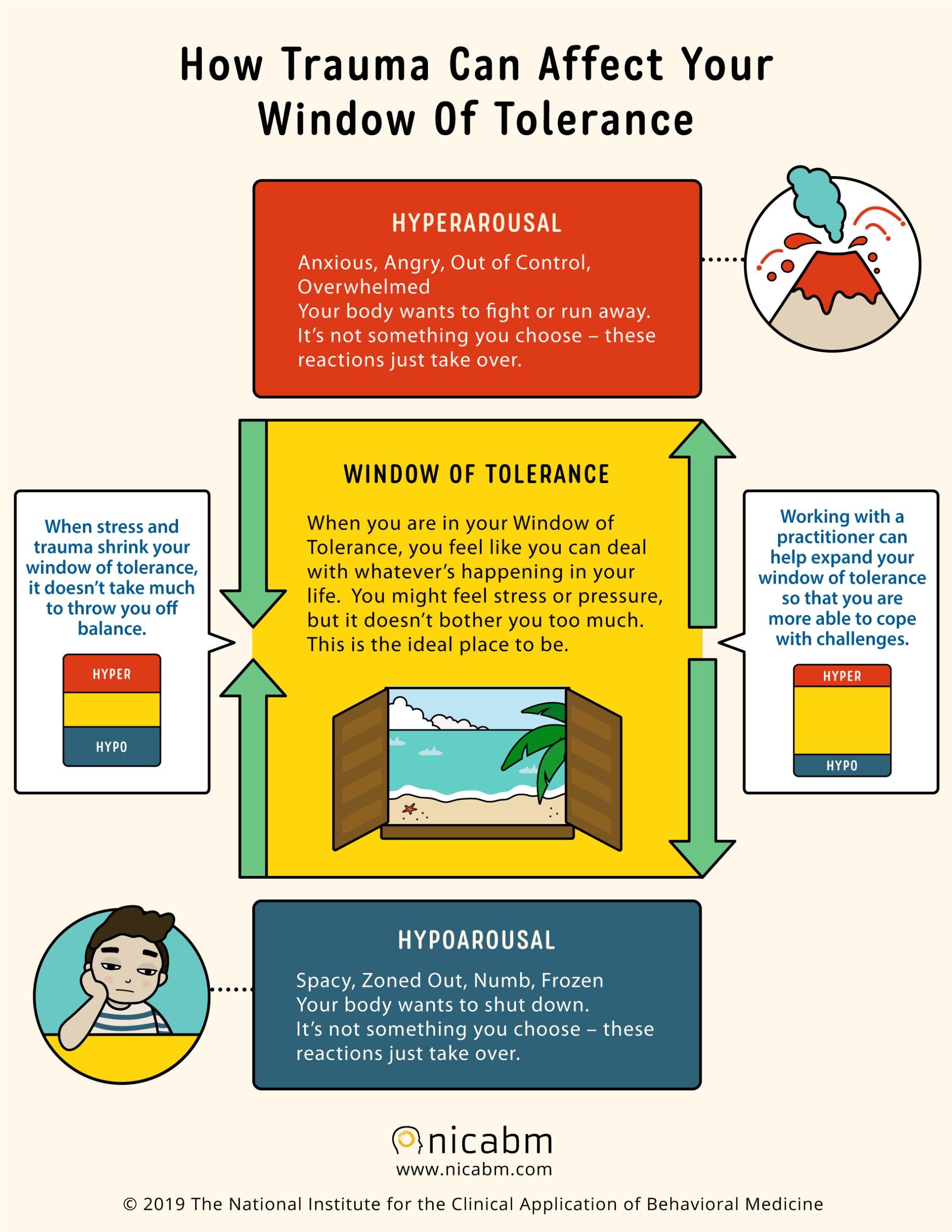
In this post, we’ll explore what the window of tolerance is, how it relates to trauma and anxiety, and how therapies like IFS (Internal Family Systems), EMDR (Eye Movement Desensitization and Reprocessing), and somatic psychotherapy can help you widen it. Whether you’re in Toronto or beyond, these insights can support your healing journey.
What Is the Window of Tolerance?
The window of tolerance is the range in which your nervous system can process emotions, thoughts, and experiences without becoming dysregulated. When you’re within this window, you feel present, grounded, and able to manage stress effectively. You can think clearly, connect with others, and respond to challenges with resilience.
However, trauma, chronic stress, or anxiety can shrink this window, making it harder to stay balanced. For example, living in Toronto’s fast-paced urban environment, with demanding work schedules, traffic, and social pressures, can intensify anxiety and narrow your window of tolerance. Trauma-informed therapies like IFS, EMDR, and somatic psychotherapy, focus on helping you recognize when you’re outside this window and guide you back to balance.
How Your Nervous System Responds to Stress and Trauma
When your brain’s amygdala, often called its “alarm system,” detects a potential threat, it activates the sympathetic nervous system. This triggers a surge of adrenaline, speeding up your heart rate and breathing to prepare your body for action, commonly known as the fight-or-flight response. In true danger, this reaction is lifesaving, equipping you to respond swiftly.
However, for those with trauma or chronic anxiety, this response can activate even in non-threatening situations, like a stressful meeting or a crowded Toronto subway. Your nervous system may become hypervigilant, misinterpreting everyday challenges as dangers. For example, you might feel compelled to overwork to prove yourself, avoid conflict to keep the peace, or constantly seek approval; not out of choice, but because your body perceives these as survival needs.
When Trauma or Anxiety Pushes You Outside Your Window
When stress, memories, or triggers (conscious or unconscious) push you outside your window of tolerance, your nervous system activates survival responses: hyperarousal (feeling overwhelmed) or hypoarousal (feeling numb or shut down). These are normal, protective reactions, but they can feel distressing if you don’t know how to navigate them. In somatic psychotherapy, we focus on noticing these responses and using body-based techniques to restore balance.
Hyperarousal: Managing Anxiety and Overwhelm with IFS and EMDR
Hyperarousal, often called the fight, flight, freeze or fawn response, is a high-energy state where your body feels on high alert, even without immediate danger. You might experience:
- Racing thoughts or difficulty concentrating
- Anxiety, panic, or irritability
- Restlessness or tight muscles
- Trouble sleeping or relaxing
- Feeling emotionally overwhelmed
For example, a Toronto professional juggling a demanding career and personal life might notice hyperarousal during a stressful workday, feeling anxious or unable to focus. In therapy, EMDR helps reprocess traumatic memories driving this response, while IFS supports self-compassion by connecting with the “parts” of you that feel overwhelmed. These approaches help calm your nervous system and widen your window of tolerance.
Hypoarousal: Overcoming Numbness with Somatic Psychotherapy
Hypoarousal is the opposite- a shutdown or collapse response where your nervous system becomes overloaded and disconnects. You might notice:
- Feeling numb, flat, or detached
- Difficulty speaking or thinking clearly
- Wanting to withdraw or isolate
- Fatigue, heaviness, or emptiness
- Feeling frozen or spaced out
For instance, someone who experienced childhood trauma might feel hypoarousal when triggered, retreating into numbness to cope. Somatic psychotherapy helps you gently reconnect with your body through movement, breath, and sensory awareness, bringing you back to the present.
How Psychotherapy Helps You Return to Your Window of Tolerance
The goal of this therapy is not to eliminate stress or triggers (well maybe sometimes it is!) but to help you recognize when you’re outside your window and return to balance safely. Here are practical techniques to try:
If You’re Feeling Shut Down (Hypoarousal):
- Observe your surroundings: Name three objects in detail (e.g., colour, texture) to ground yourself in the present.
- Move gently: Stand, stretch, or walk slowly to awaken your body.
- Breathe intentionally: Take slow breaths with longer exhales to activate your calming response.
- Engage your senses: Hold a textured object, smell a soothing scent, or listen to ambient sounds.
- Affirm safety: Quietly say, “I’m here, it’s today, I’m safe.”
If You’re Feeling Overwhelmed or Anxious (Hyperarousal):
- Practice diaphragmatic breathing: Inhale deeply into your belly, exhale slowly.
- Ground through touch: Feel your feet on the floor or hold a solid object.
- Sip water through a straw: This slows your breathing naturally.
- Try gentle movement: Yoga, stretching, qi gong, or shaking out your hands can release tension.
- Express safely: Write, cry, or speak to let emotions move through you.
These techniques help regulate your nervous system.
How Specific Therapies Widen Your Window of Tolerance
Each therapy, IFS, EMDR, somatic psychotherapy, DBR and Havening, offers unique tools to expand your emotional capacity and resilience.
IFS (Internal Family Systems)
IFS views your mind as a system of “parts” (e.g., a part that feels anxious or protective). By connecting with these parts with curiosity and compassion, you build self-trust and emotional regulation. For example, a Toronto client struggling with anxiety might use IFS to dialogue with their anxious part, uncovering its protective role and reducing overwhelm.
EMDR (Eye Movement Desensitization and Reprocessing)
EMDR uses guided eye movements to reprocess traumatic memories, helping your brain integrate them so they no longer trigger hyperarousal or hypoarousal. A client who experienced a car accident in Toronto might use EMDR to reduce flashbacks and feel safer in their body.
Somatic Psychotherapy
Somatic psychotherapy focuses on the body’s role in healing. By noticing physical sensations (e.g., tightness in your chest), you learn to release stored trauma and restore balance. This approach is especially helpful in Toronto’s high-stress environment, where physical tension often accompanies anxiety.
Why Toronto’s Environment Impacts Your Window of Tolerance
Living in a bustling city like Toronto can challenge your nervous system. The constant noise, crowded commutes, and pressure to keep up can narrow your window of tolerance, especially if you’re already managing trauma or anxiety. For example, a downtown Toronto resident might feel hyperarousal during rush hour or hypoarousal after a long workday. Working with a Toronto psychotherapist who understands this urban context can help you develop tailored strategies to stay grounded.
A Client’s Journey
Consider Sarah, a Toronto teacher who struggled with anxiety and hypoarousal after a workplace conflict. In therapy, she learned to notice her body’s signals, like heaviness in her chest, using somatic psychotherapy. Through IFS, she connected with her anxious part, discovering it was trying to protect her from criticism. EMDR helped her reprocess memories of past rejection, widening her window of tolerance. Over time, Sarah felt more present and confident, even in stressful situations. This integrative approach, combining IFS, EMDR, and somatic psychotherapy, is tailored to each client’s needs.
Self-Regulation Tools for Anxiety and Trauma Between Therapy Sessions
To support yourself outside therapy, try these additional tools:
- 5-4-3-2-1 Grounding Technique: Name 5 things you see, 4 you can touch, 3 you can hear, 2 you can smell, and 1 you can taste to anchor in the present.
- Guided Imagery: Picture a gentle rocking motion, like a hammock, to regulate your breath.
- Containment Visualization: Imagine placing intrusive thoughts in a box until you’re ready to process them.
- Safe Place Imagery: Visualize a peaceful space (e.g., a quiet Toronto park) where you feel secure.
- Journaling: Write about your emotions to release tension and gain clarity.
These practices, inspired by somatic psychotherapy and IFS, build resilience over time. For more resources, explore our blog on trauma and anxiety management.
A Final Word on Healing with a Toronto Psychotherapist
Understanding your window of tolerance is a powerful step toward self-awareness. Your emotional responses, whether overwhelm or numbness, are not flaws but survival strategies shaped by your experiences. With compassion, patience, and the right tools, you can widen your window and live with more balance and connection. Therapies like IFS, EMDR, and somatic psychotherapy, offered by Toronto psychotherapists, provide a path to healing tailored to your unique needs.